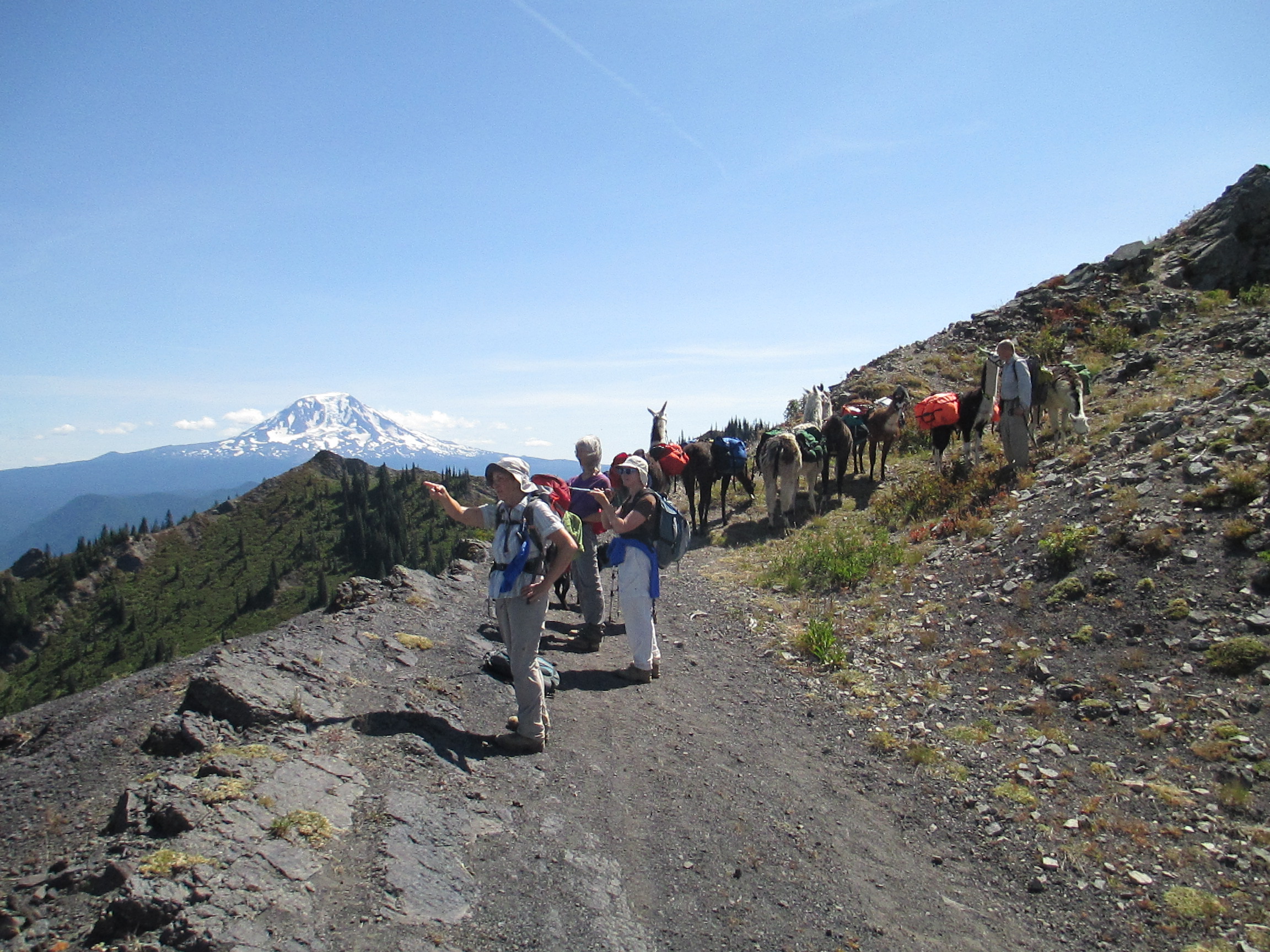
How difficult are the trips?
- Most are moderate to very strenuous. Only the Lewis River trip is easy. Each trip in the calendar has a difficulty rating, and we target “what a fit 70-year-old former backpacker” would say. Most of our trails are pretty difficult in the mountains. There is usually a lot of elevation gain or loss. The areas we go into can require over 2000 feet of elevation gain in a day. A typical day of hiking is 5 to 7 miles on pretty tough trails
Who usually goes on our trips?
Anyone with the fitness needed for the trip they select, for example:
— People who used to backpack, but want to enjoy carrying less weight and enjoy fresh food.
— People who have never backpacked or don’t have gear and want a comfortable and social way to experience the backcountry.
— Families with kids, including multi-generation families, who’d like someone else to take care of all the details so everyone in the family can have a good time.
What is included?
All trips include meals, starting with lunch on the first day to lunch on the last day. Also included is packing up to 25 pounds of gear per person, including tent, pad and sleeping bag. We bring the tent, sleeping pad, pillow, dry bag, trekking poles, water filters, coffee, cooking gear, cups, sporks, plates, and some herbal tea. We bring a well-supplied first aid kit, and a kit for burying human waste that includes toilet paper and hand wipes. We bring lightweight camp chairs for everyone, and a kitchen tarp for inclement weather. A sleeping bag is available if requested, but it’s usually best to bring your own.
What is not included? (items below are suggested for comfort)
- Alcoholic beverages
- Personal water container
- Rain gear or warm clothing
- Personal medications
- Sun screen
- Insect repellent
- Flashlight
How do I reserve a trip?
We require a $500 deposit to hold your spot on a trip. Click the link on the trip page. When we receive your request, we’ll send you an invoice with the deposit amount.
What is the refund policy?
Cancellations will get a full refund up to April 1, after that the deposit will be put towards llama expenses for the winter. Final payment for the trip is due 2 weeks before the start date, this payment is 50% refundable for a late cancellation. If we have to cancel becasue of our own inability to provide the trip (illness, injury, mechanical breakdown, llama unavailability) we will refund the payment and the deposit 100%. If the trip is cancelled due to fire closure or other administrative reason beyond our control, the final payment is refunded, but not the initial $500 deposit.
What if a medical evacuation is required?
Search and Rescue volunteer groups are in place for both Lewis and Skamania counties, as well as the Olympic National Park. Activating the appropriate agency is the first step. They have access to ambulance services and helicopter evacuation. Parts of the evacuation cost may be covered by the managing agency, but you may consider carrying medical evacuation insurance, which is relatively inexpensive for a single trip. No evacuation expenses will be covered by Washington Llamas.
Why do you use llamas?
Safety and low impact are the two main reasons. They are unlikely to injure a handler or client. Other advantages include sure-footedness, calmness on the trail (compared to horses), low-impact on the trails, ease of training and good health. They are also willing workers that seem to look forward to most aspects of the trip.
How much can they carry?
Typically we’ll put 60 to 65 pounds of gear on each llama. Difficulty and length of travel, heat and conditioning all affect how much they can carry. They are not well-adapted to hot weather. Hot days will necessitate early mornings.
Do Llamas spit?
Yes, they all know how to do that. Well-trained llamas do not intentionally spit at people unless very upset, but cross-fire happens. You might induce a spit if you approach them too fast, and THEY are the ones who decide what is too fast …
Year Guides Hit Clients Hit
2017 0 0
2018 1 0
2019 0 0
2020 0 1
2021 1 0
2022 1 1
2023 1 0
2024 0 0
2025 2 0